ICRA · 2026
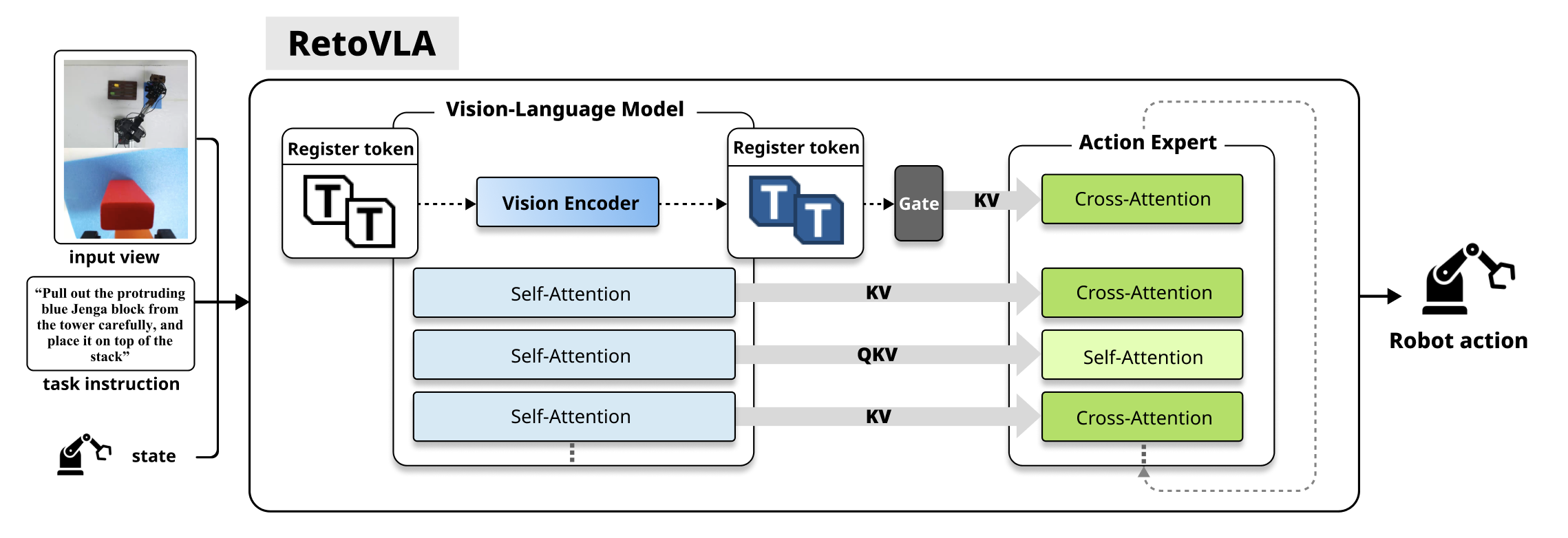
RetoVLA
Reusing internal register tokens to provide spatial context for action generation without increasing the model's parameter count.
RESEARCHER & FOUNDER
I am a Ph.D. student at KAIST AI, advised by Prof. Han-Lim Choi in the Laboratory for Information and Control Systems (LiCS). My research interests include vision-language models, multi-agent systems, and intelligent robotics. I am particularly interested in how robot swarms coordinate and make decentralized decisions under limited sensing, communication, and computation. My long-term interests also include superintelligence and how learning and reasoning can enable more capable autonomous systems.
I also founded Plaid Labs, where we help businesses modernize their operations through Digital Transformation (DX) and AI Transformation (AX). My work spans workflow automation, private LLM deployment, and edge and on-device AI, connecting research with systems people can use in practice.
ICRA · 2026
Reusing internal register tokens to provide spatial context for action generation without increasing the model's parameter count.
ACCV · 2026
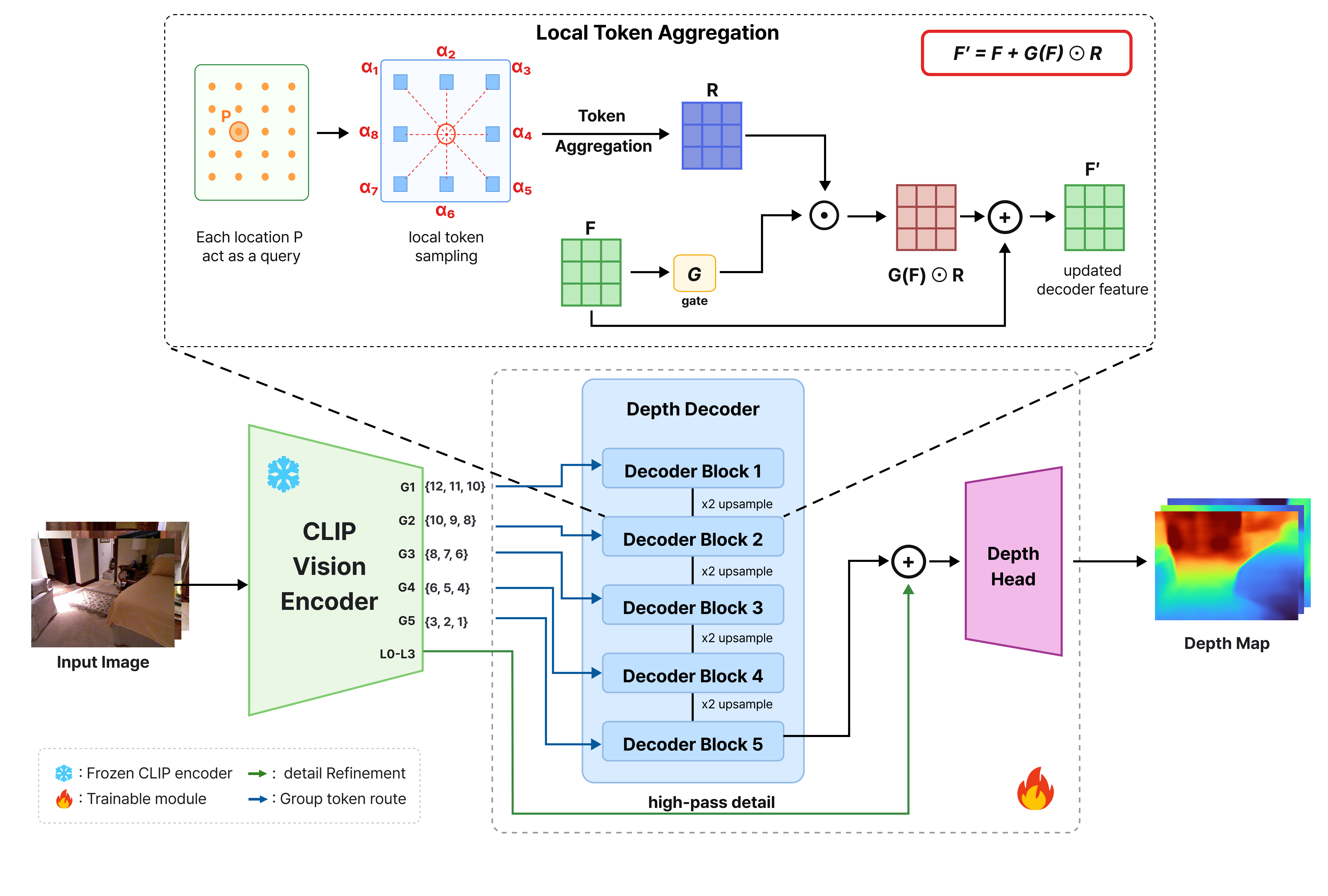
Decoding local geometry from frozen CLIP tokens through fixed neighborhood aggregation, gated residual updates, and shallow token-detail refinement.
Helping businesses modernize through Digital Transformation (DX) and AI Transformation (AX).
We build and integrate software and AI systems—from workflow automation and private LLM deployment to edge and on-device AI connected to existing hardware.

Open-source research skills you can install in Claude Code and Codex. Read papers, explore related work, develop ideas, design experiments, and write and review research proposals.
Map prior work into a taxonomy, estimate resources and timelines, and examine why a study matters, whether it is feasible, and how to test it. AI helps structure the work; the researcher owns the questions and decisions.
Things I’m thinking about.
